The Oregon International Automotive and Motorcycle Show is a hit!!
- Phil Harpster

- Feb 22, 2025
- 3 min read
Updated: Feb 23, 2025
The Oregon International Automotive and Motorcycle Show was, in a word, a spectacle. A grand carnival of metal and electrons, where automotive dreams and realities awkwardly rubbed elbows. The air buzzed with the sound of excitable chatter, punctuated by the occasional shriek of a child discovering that, yes, they too could crawl through the Volkswagen ID. Buzz like an urban explorer conquering a suburban jungle gym.
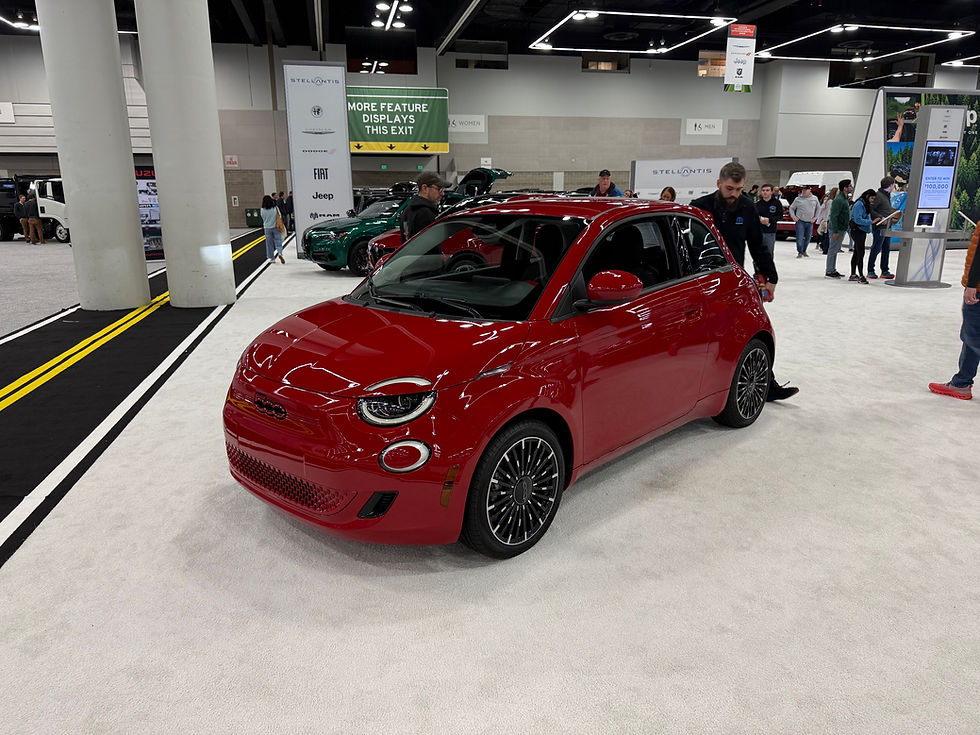
Electric vehicles were out in full force, with Tesla leading the charge—both figuratively and literally. The Tesla booth, an altar to sleek minimalism, was swarmed with eager enthusiasts. And in the middle of it all, like a calm eye in the storm, stood Jen. She was helpful, friendly, and possessed the patience of a saint as she fielded question after question about the Cybertruck’s absurd angles and the Cybertaxi’s lack of a steering wheel.

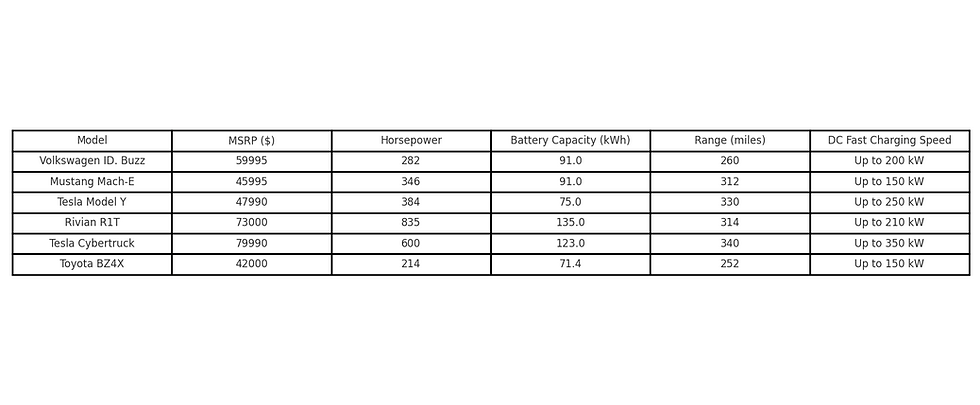
Volkswagen had its own crowd-drawing masterpiece: the ID. Buzz, a retro-inspired electric van that had people gazing at it as though it had just rolled out of a time machine, slightly bewildered but absolutely charmed. Ford, not to be outdone, showcased a 2025 Mustang Mach-E in a green so rich it might as well have come with a trust fund. And then there was Chevrolet, parading the Blazer EV and Equinox EV with a level of confidence that suggested they knew something the rest of us didn’t—like maybe, just maybe, these cars were actually fun to drive. And for what it’s worth, the build quality was unexpectedly impressive.

There was a whole section dedicated to vehicle retrofits, featuring hulking Mercedes Sprinters that had been converted into RVs for full-time living or recreational adventures. The presence of these custom conversions was a reminder that while EVs are the future, there’s still a market for personalizing traditional gas-powered vehicles. And speaking of things conspicuously absent, where was Aptera? Their entire schtick is building a hyper-efficient, solar-powered three-wheeled spaceship of a car, and yet they were nowhere to be found. A missed opportunity? Absolutely.

Then, there was the crowd. An enthusiastic, excitable mass of humanity that poked, prodded, and in some cases outright invaded the vehicles on display. Children scrambled into every crevice of the ID.4 like over-caffeinated spelunkers, while adults hovered around Tesla’s Cybertruck with expressions that ranged from awe to mild horror.

For those needing a break from all the automotive indulgence, the show organizers had thoughtfully included a pop-up arcade in the lobby, where nostalgic parents and gleeful kids could hammer away at buttons and joysticks, momentarily transported to a world where horsepower had nothing to do with batteries.
The event was unexpectedly colorful, a refreshing departure from the usual sea of monochrome. It was a stark contrast to the reality of car sales today, where nearly 80% of vehicles are white, black, or gray. And yet, at the show, vibrant colors were on full display—Tesla’s deep blue, Ford’s stunning green, and Chevrolet’s bold reds. It was a reminder that cars don’t have to be dull; they can be engaging, expressive, and fun. The industry’s insistence on grayscale dominance may be practical, but seeing these electrified bursts of color was proof that a more vibrant automotive future is possible.
Car color trends are a curious thing. Nearly 80% of all vehicles sold today are white, black, or gray, a trend driven by factors like resale value, cost efficiency, and perceived luxury. But studies suggest that less common colors—yellow, orange, and green—actually retain their value better than their grayscale counterparts. In fact, yellow cars have the lowest depreciation rate, holding value better than black or silver vehicles. Even income and demographics play a role: higher-income buyers tend to favor neutral colors, while younger demographics lean toward more vibrant choices.
At the end of the day, the Oregon International Automotive and Motorcycle Show was an experience that balanced the past, present, and future of transportation with remarkable ease. The EV revolution is undeniably here, but as the show made clear, the transition is far from a clean break. For every cutting-edge electric marvel, there were still plenty of echoes of internal combustion’s glory days. And somewhere in between, the public—curious, eager, skeptical—wandered the aisles, trying to figure out where they fit into this ever-evolving automotive landscape.


Comments